
Gen Z's shift to AI-first search reflects growing use of AI chatbots, social platforms, and online communities to research topics, compare options, and evaluate businesses. Traditional search engines remain important, but marketers increasingly need content that supports AI-generated answers, social discovery, source credibility, and multi-platform visibility.
Gen Z’s Shift to AI-First Search is changing how people discover brands, compare options, and decide whom to trust. Younger users no longer move through one clean Google-first path. They ask chatbots for explanations, use short-form video for proof, check community platforms for lived experience, and return to search engines when they need validation. For SEOPEZ, the practical answer is not to abandon SEO. The answer is to build search visibility that works across Google, AI summaries, ChatGPT-style answers, social discovery, and citation-based research behavior.
Quick Check
If your content still depends on traditional rankings alone, SEOPEZ can structure a monthly seo service around AI search visibility, entity signals, and search-ready content systems.
Gen Z’s Shift to AI-First Search: What Changed
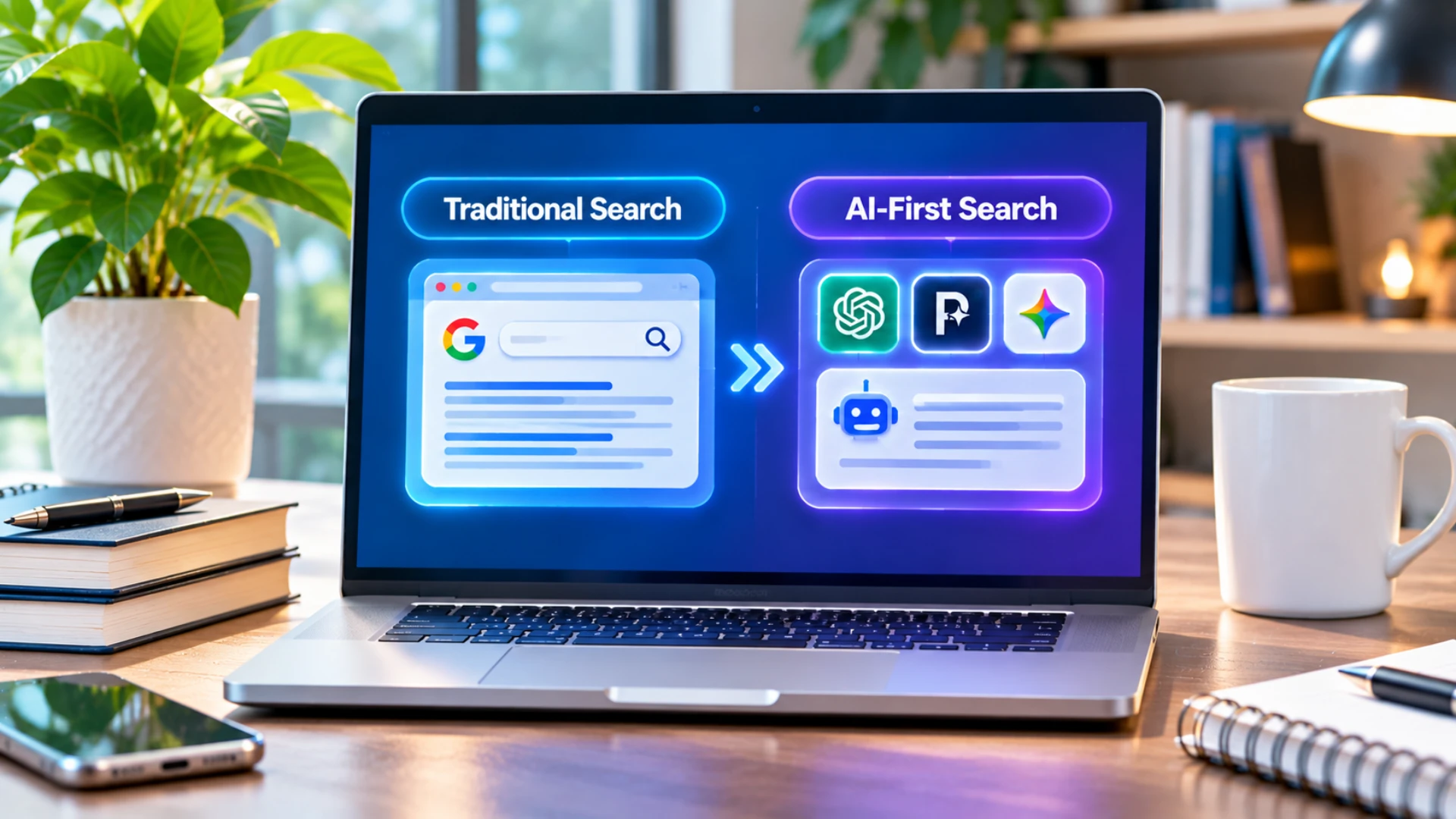
Gen Z’s Shift to AI-First Search is not a simple move from Google to one chatbot. It is a move from keyword searching to answer assembling. Pew Research Center found that 57% of U.S. teens have used chatbots to search for information, and 54% have used them for schoolwork help.
| Search behavior | Traditional search pattern | AI-first Gen Z pattern | SEOPEZ implication |
|---|---|---|---|
| Starting point | Search engine query | Chatbot, video platform, community thread, then Google | Build content for multi-platform discovery |
| Result format | Ranked links | Synthesized answer with cited or implied sources | Strengthen entity clarity and sourceworthiness |
| Trust signal | Ranking position | Explanation quality, proof, community validation | Publish clear, cited, structured content |
| Brand discovery | SERP snippet and website | AI answer, TikTok/YouTube proof, Reddit-style validation | Connect SEO, GEO, and content authority |
| Conversion path | Click, browse, contact | Ask, compare, verify, then visit | Make every page answer-ready |
This Gen Z search behavior rewards brands that explain clearly, support claims, and publish content in formats AI systems can understand. SEOPEZ treats this as a visibility architecture problem, not a trend-chasing problem.
A strong starting point is understanding the AI-era SEO tool workflow because AI-first search changes what teams measure, how they research queries, and how they evaluate source visibility.
Why Gen Z Searches With AI First?
Gen Z’s Shift to AI-First Search is driven by speed, context, and lower friction. Adobe’s 2025 ChatGPT search survey reported that 77% of U.S. ChatGPT users surveyed used it as a search engine, and 28% of Gen Z respondents were most likely to start searches on ChatGPT.
For Gen Z, the search box is no longer just a place to type “best option.” It is a place to ask, “Compare these options,” “explain this simply,” “what should I look for,” or “summarize the difference.” That changes the content brands need to publish.
SEOPEZ builds around this shift by creating pages that answer complete question sets, not just isolated keywords. The work connects SEO research with Generative Engine Optimization, so content can serve both search crawlers and AI answer systems.
This is where the difference between AI-driven SEO changes and old ranking tactics becomes important. Gen Z search does not wait for users to click ten blue links before forming an opinion.
AI-First Search Does Not Replace Google
Gen Z’s Shift to AI-First Search does not mean Google disappears. It means Google becomes one checkpoint inside a broader decision path. Search Engine Land reported that Gen Z users were more likely than older groups to use AI chatbots for search, while also using YouTube, Instagram, and TikTok heavily for information discovery.
The practical risk for brands is assuming that ranking on Google is enough. A Gen Z user may ask an AI assistant for options, watch creator-led examples, compare community comments, and only then search the brand name.
SEOPEZ handles this by treating Google SEO, GEO, and answer optimization as connected layers. The website still matters, but it must be structured so AI systems, search engines, and human readers can all understand the same core facts.
For teams new to this distinction, the GEO and traditional SEO differences are central because AI-first search rewards clarity, context, and source confidence alongside rankings.
How Gen Z Builds Trust Before Clicking?
Gen Z’s Shift to AI-First Search changes the trust sequence. Users often form a first impression before they land on the website. Adobe reported that 36% of surveyed U.S. ChatGPT search users discovered a new product or brand through ChatGPT, with Gen Z leading at 47%.
That means brand visibility is moving upstream. If AI systems summarize a market and your brand is missing, unclear, or poorly represented, the user may never reach your site.
SEOPEZ focuses on building retrievable explanations: pages that define the topic, compare options, answer objections, clarify process, and connect related entities. These signals help both users and AI systems understand why the brand belongs in the conversation.
This also explains why AI source selection fundamentals matter. AI-first users depend on synthesized answers, so the sources behind those answers become part of the brand visibility problem.
Zero-Click Behavior Fits Gen Z Search
Gen Z’s Shift to AI-First Search accelerates zero-click behavior. Users can get summaries, comparisons, definitions, and next steps without visiting a website. McKinsey reported that about half of consumers use AI-powered search today and that AI summaries already appear across a large share of Google searches.
For SEOPEZ, this means content strategy must stop treating the click as the only measurable win. A brand can influence a decision inside an AI answer, a search summary, or a cited comparison before the visit happens.
The right response is not thinner content. It is better-structured content. Pages need concise definitions, direct answers, comparison sections, FAQs, original positioning, and consistent entity references.
The connection between AI-first search and zero-click search patterns is direct. Gen Z users are comfortable getting answers without clicking, so brands need visibility where the answer is formed.
What AI Query Fan-Out Means for Gen Z?
Gen Z’s Shift to AI-First Search makes query fan-out important because AI systems often expand one prompt into many implied questions. A user may ask, “Is this brand worth it?” but the AI system may evaluate reviews, comparisons, pricing context, alternatives, definitions, and source reputation.
| Gen Z prompt style | Hidden AI search expansion | Content SEOPEZ would prioritize |
|---|---|---|
| “What should I use for this?” | Options, criteria, comparisons, risks | Decision guides and comparison tables |
| “Explain it simply” | Definitions, examples, beginner context | Clear educational sections |
| “Is this legit?” | Reviews, reputation, citations, third-party mentions | Entity consistency and trust signals |
| “Which is better?” | Feature differences, use cases, tradeoffs | Comparison pages and structured FAQs |
| “What are people saying?” | Community discussions and social proof | Review-aware content and social listening |
This behavior means one page cannot answer only one narrow keyword and expect to win. SEOPEZ plans content clusters that cover the surrounding questions AI systems are likely to retrieve.
The AI query fan-out process helps explain why Gen Z search visibility depends on topical coverage, not just one optimized title tag.
Why Cited Sources Matter More Now?
Gen Z’s Shift to AI-First Search makes citation quality more visible. In AI search experiences, users may see a compact answer, a few source cards, and a short set of cited references. If the brand’s content is not clear, useful, or source-worthy, it can be skipped.
A university-student study on LLMs and traditional search found that students often switch between GPT-style tools and Google, using AI for summarization and explanation while relying on search engines for credible multi-source information.
That switching behavior matters because Gen Z does not treat AI answers as the end of every journey. Many users still verify. The brand needs to survive both stages: AI summary and human validation.
SEOPEZ strengthens this by improving content architecture, schema opportunities, topical completeness, entity consistency, and on-page clarity. The goal is to make the brand easier to retrieve, cite, compare, and trust.
A useful technical angle is the AI and Google citation overlap pattern, because AI-first visibility may come from sources and signals that do not mirror traditional rankings exactly.
GEO, SEO, and AEO Now Work Together
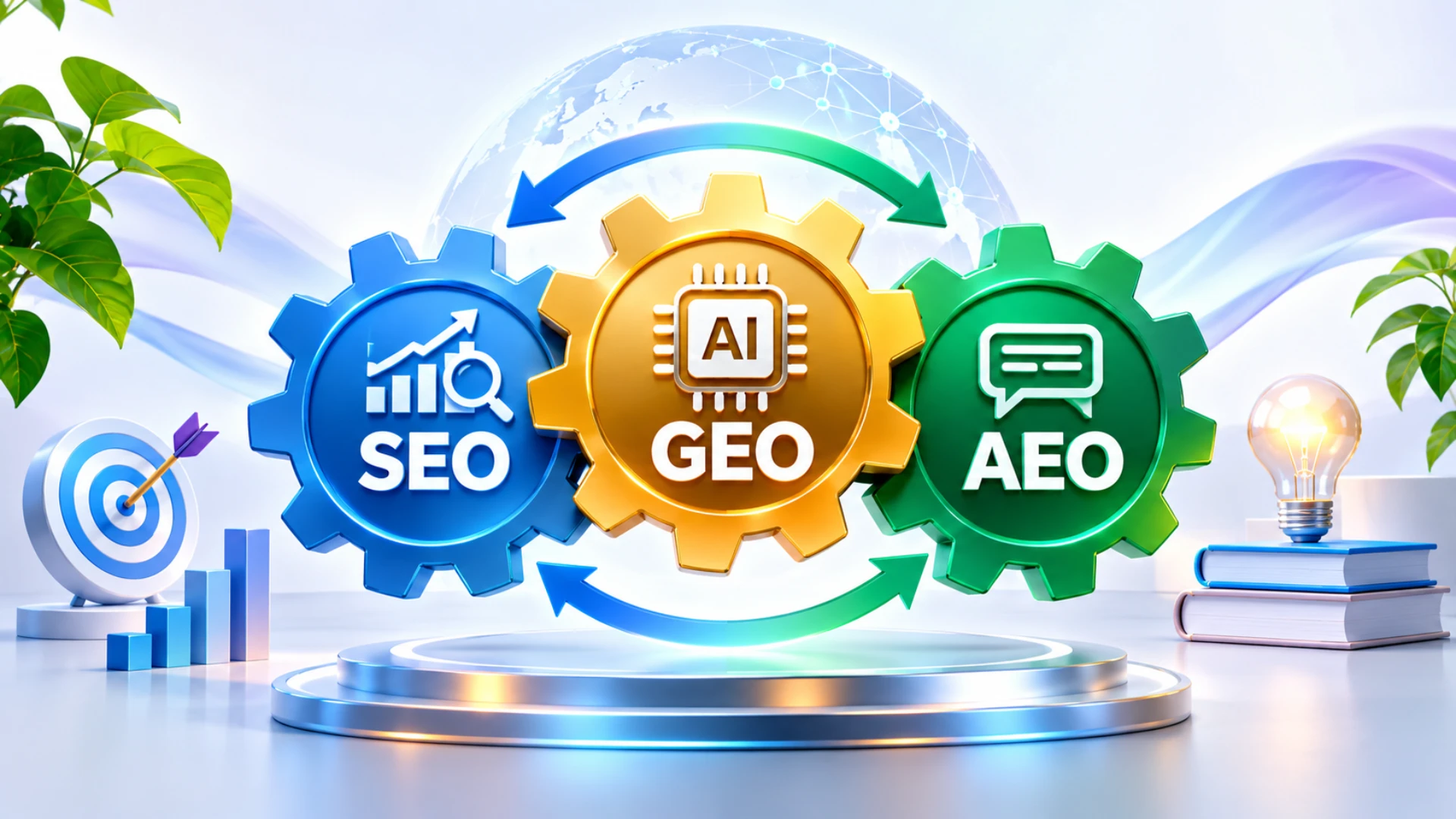
Gen Z’s Shift to AI-First Search creates a three-part optimization problem. SEO helps pages rank. GEO helps content become understandable and retrievable by generative systems. AEO helps answer engines extract direct responses.
SEOPEZ does not treat these as separate silos. A strong page needs technical accessibility, keyword relevance, entity clarity, answer formatting, internal links, trustworthy explanations, and conversion paths that match the user’s intent.
This is especially important for brands serving a global SEO audience. Gen Z search behavior is not locked to one platform, country, or device. The same user may move from chatbot to video to Google to a brand page in minutes.
The practical framework is covered in the GEO, SEO, and AEO distinctions, which helps teams understand which layer solves which visibility problem.
How SEOPEZ Builds for AI-First Search
Gen Z’s Shift to AI-First Search requires a content system that is clearer than a standard blog calendar. SEOPEZ starts by identifying the actual prompts, comparison questions, objections, and proof points that younger searchers use when researching a topic.
Then the content is mapped into clusters. Each page has a job: define, compare, explain, validate, or convert. Internal links connect these jobs so readers and AI systems can follow a clean knowledge path.
SEOPEZ also looks at whether the brand is understandable as an entity. That includes consistent naming, service descriptions, author expertise, structured sections, topical depth, and pages that answer real follow-up questions.
For brands that need controlled execution without building a large in-house search team, SEOPEZ can align strategy, publishing, optimization, and reporting through affordable SEO services designed around practical visibility work.
What Brands Should Change First?
Gen Z’s Shift to AI-First Search does not require every brand to rebuild everything at once. The first move is to identify pages that already get impressions but do not fully answer the user’s decision path.
Those pages should be expanded with direct answers, comparison sections, citations where appropriate, FAQs, internal links, and clearer service relevance. Thin pages are weaker in both traditional search and AI retrieval.
The second move is to build topic clusters around the prompts Gen Z users actually ask. These clusters should include definitions, workflows, mistakes, comparisons, platform-specific behavior, and buying-stage questions.
The third move is measurement. SEOPEZ looks beyond rank tracking alone and evaluates visibility across AI citations, brand mentions, zero-click surfaces, organic traffic quality, and assisted conversions.
FAQs About Gen Z’s Shift to AI-First Search
What does Gen Z's Shift to AI-First Search mean?
Gen Z's Shift to AI-First Search means younger users increasingly start research with AI tools, social platforms, or community sources instead of relying only on a traditional search engine. It does not mean Google is irrelevant. It means Google is one part of a wider discovery path where AI summaries, video proof, short answers, peer validation, and brand websites all influence the final decision.
Why does Gen Z use AI search tools?
Gen Z uses AI search tools because they reduce effort. A chatbot can summarize a topic, compare options, explain unfamiliar terms, and produce a practical next step faster than scanning many pages. Pew found that information seeking is one of the top teen chatbot uses, with more than half of U.S. teens saying they have used chatbots to search for information.
Does Gen Z's Shift to AI-First Search hurt SEO?
Gen Z's Shift to AI-First Search hurts weak SEO, not useful SEO. Pages that only chase keywords without answering the full question become easier to skip. Strong SEO becomes more valuable when it is paired with GEO, AEO, structured explanations, internal links, and trusted source signals. The brands that adapt can appear in more discovery moments, not fewer.
How should a brand optimize for Gen Z AI search behavior?
A brand should optimize for Gen Z AI search behavior by publishing content that answers complete prompts, not just keywords. That includes definitions, comparisons, workflows, examples, FAQs, and clear proof. The content should also make the brand’s entity, services, and expertise easy to understand. SEOPEZ approaches this through connected SEO, GEO, and content architecture work.
Is TikTok part of Gen Z's Shift to AI-First Search?
TikTok is part of the broader shift because Gen Z often uses video-first platforms for discovery, examples, and social proof. Adobe’s 2026 TikTok search research found that nearly half of U.S. consumers surveyed used TikTok as a search engine, and Gen Z was especially likely to find platforms like TikTok and Reddit useful for information discovery.
Why do AI citations matter for Gen Z search?
AI citations matter because Gen Z users often receive a summarized answer before they decide which source to visit. If a brand is cited, mentioned, or reflected accurately in that answer, it can shape trust earlier in the journey. If the brand is missing, unclear, or unsupported, it may lose attention before the website ever gets a click.
Can small businesses compete in Gen Z AI-first search?
Small businesses can compete in Gen Z AI-first search when they publish clearer, more specific, and more useful content than larger competitors. AI systems and younger users both need direct answers, proof, and context. A small business with strong service pages, helpful educational content, consistent entity signals, and a focused internal-linking structure can become easier to retrieve and recommend.
How fast should brands respond to Gen Z's Shift to AI-First Search?
Brands should respond now, but the work should be systematic. The first priority is improving existing pages that already have search potential. The second is building topic clusters around real prompts and questions. The third is tracking whether the brand appears in AI summaries, citation surfaces, and comparison answers. Delaying this work leaves more discovery moments to competitors.
Want us to handle it for you?
See the sites, the numbers and the price before you order.