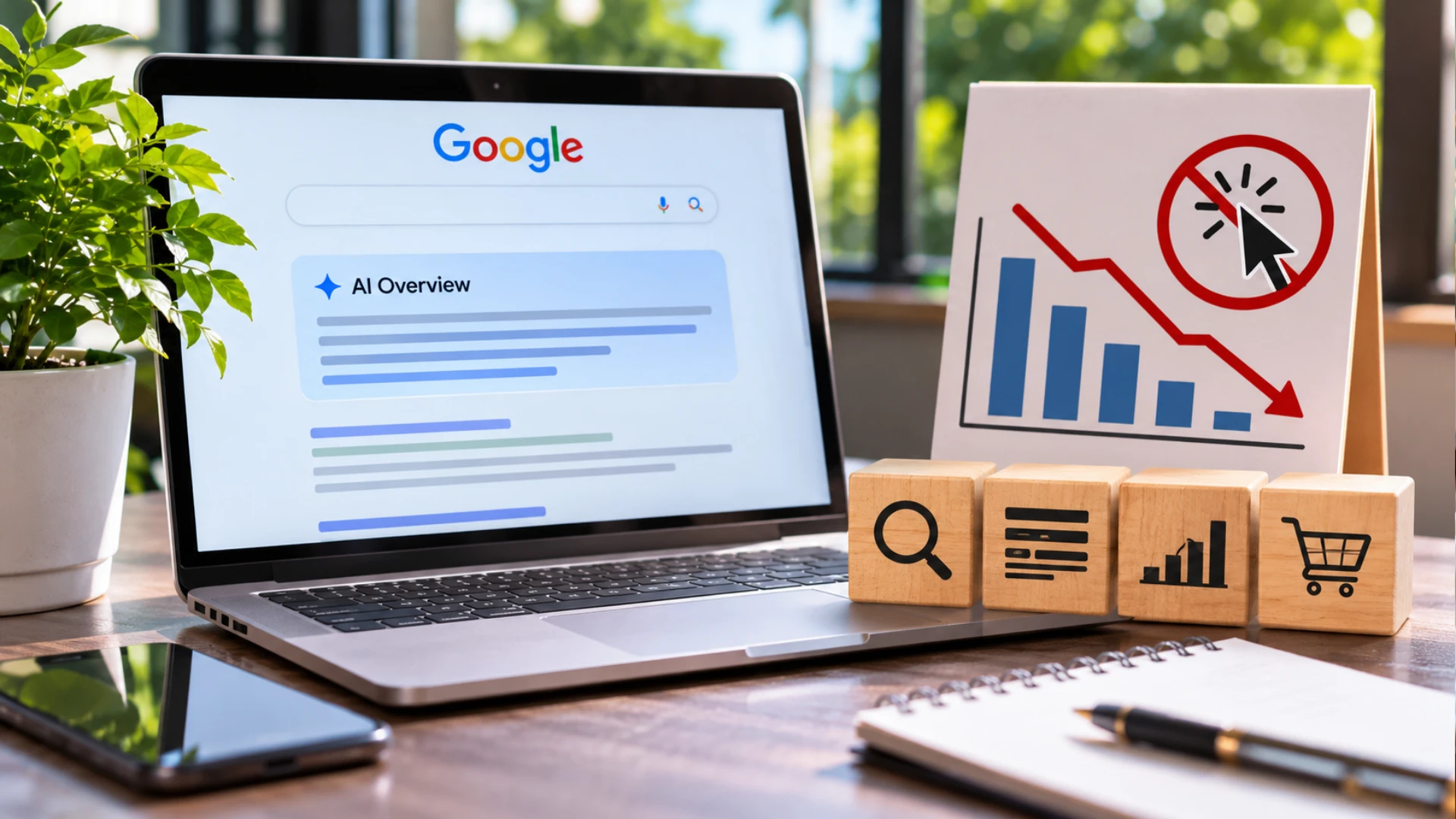
Google's zero-click search trend occurs when users obtain information directly from search results without visiting external websites. Features such as AI Overviews, featured snippets, and knowledge panels can reduce organic clicks even when rankings remain stable. Businesses can adapt by creating original content, improving technical SEO, monitoring search visibility, and optimizing conversion paths.
Google can keep a page visible while sending it fewer visitors, which makes stable rankings feel misleading and traffic losses difficult to diagnose. A serious response starts by separating SERP click absorption from indexing failures, ranking declines, weaker demand, or technical mistakes. Experienced SEO teams then protect performance by combining distinctive content, strong technical foundations, AI visibility tracking, and conversion paths that give searchers a reason to continue beyond the results page.
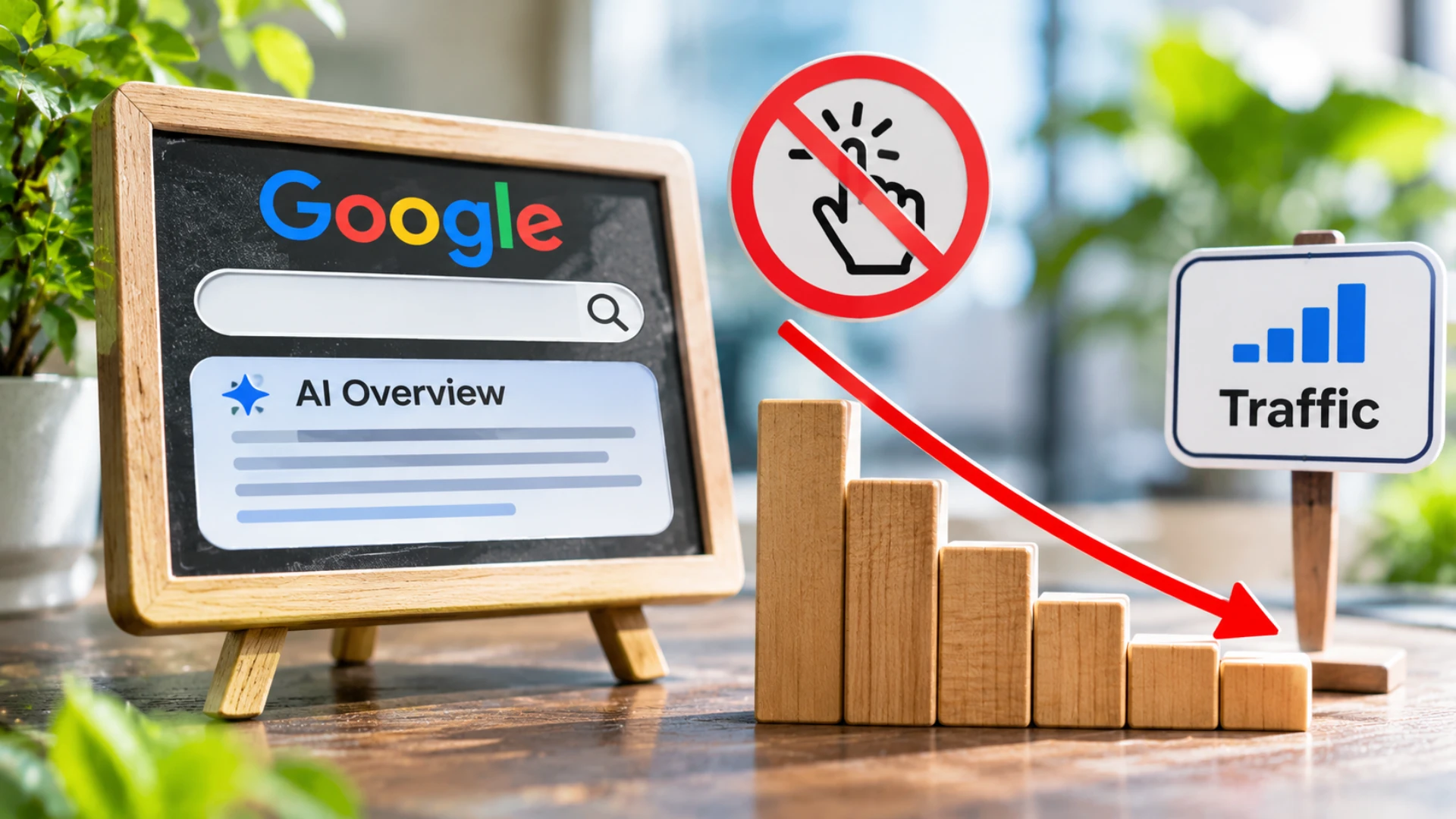
Zero-click behaviour changes how search visibility turns into business results. A ranking can still create awareness while producing fewer direct sessions. The central task is understanding where the click disappeared and whether the remaining visibility supports a later action.
| Signal | Likely interpretation | First action |
|---|---|---|
| Clicks fall while impressions stay stable | SERP features may be absorbing demand | Inspect the affected queries and live results |
| Clicks and impressions fall together | Rankings, indexing, demand, or technical health may have changed | Review Search Console, indexing, and trends |
| Impressions rise while CTR declines | Visibility is growing faster than visits | Segment AI, informational, branded, and commercial queries |
| Rankings stay stable but conversions fall | The remaining traffic may be less qualified | Review landing intent and conversion paths |
| Branded searches rise while generic clicks fall | Search visibility may be building delayed recognition | Track direct, branded, and assisted conversions |
| One directory suddenly collapses | A template, canonical, migration, or internal-link issue may exist | Audit the affected section separately |
The widely discussed 68.01% figure describes US browser-based Google searches during the first four months of 2026. It is a panel estimate, not a universal rate for every country, industry, device, or website. Historical comparisons also use different datasets, so the direction is more dependable than a precise year-to-year jump.
Zero-click search existed before generative AI through featured snippets, calculators, maps, knowledge panels, and other direct-answer features. AI Overviews expanded the effect by summarising longer and more detailed informational queries. The result is a wider separation between being seen, earning a click, and producing revenue.
Industry-Specific Impacts Reveal Uneven Click Loss
Zero-click pressure does not affect every business model equally. The deciding factor is whether a searcher can complete the task directly on Google. Informational publishers usually face greater exposure than businesses requiring comparison, location selection, consultation, or purchase.
Publishers and educational sites face the clearest risk. Definitions, basic explanations, short comparisons, and introductory guides are easy to summarise inside the results page. These pages need original research, first-hand evidence, or useful tools that cannot fit inside a short generated answer.
Local businesses retain stronger action-based opportunities. Searchers may still need directions, availability, service details, proof, and a direct conversation before choosing a provider. A strong local organic results overview and clear business profile optimization steps help convert search visibility into calls, visits, and branded follow-up searches.
Ecommerce and commercial services still require external action. Users normally need to inspect specifications, availability, policies, pricing, or suitability before completing a purchase. The content must therefore move beyond broad education and support the exact decision that leads toward a product or service.
B2B and complex services depend on trust depth. A generated summary can explain a problem, but it rarely replaces detailed proof, implementation planning, case evidence, and commercial discussion. Businesses should connect informational visibility to specialist pages rather than leaving readers at a generic explanation.
Diagnose Traffic Loss Before Blaming AI Overviews
A lower click graph is a symptom rather than a diagnosis. AI Overviews may be involved, but technical defects, weaker rankings, seasonality, or reporting changes can create similar patterns. A structured investigation prevents teams from rebuilding content when the real issue sits elsewhere.
- Compare clicks and impressions. Stable impressions with lower clicks suggest a CTR problem, while falling impressions require a broader ranking or indexing review.
- Segment by query intent. Separate definitions, questions, branded terms, local searches, comparisons, and transactional phrases before judging total performance.
- Inspect the live SERP. Record AI Overviews, snippets, maps, videos, shopping modules, and other features appearing above or around the result.
- Check index eligibility. Review noindex directives, canonical tags, robots rules, redirects, duplicate URLs, and migration changes.
- Compare affected page groups. A sudden loss limited to one template often points to a shared technical or content issue.
- Review demand changes. Use trend data and year-over-year comparisons to separate market decline from site-specific decline.
The technical SEO basics provide the first eligibility checks, while a complete SEO audit structure helps connect crawling, indexing, content, and authority signals. Review the common SEO ranking mistakes before assigning every loss to generative search. This sequence protects the team from fixing the wrong problem.
A clean-browser SERP check should use the highest-loss queries from the last strong period. Record which features appear, whether the ranking changed, and whether the result’s title or description became less compelling. The metadata optimization steps can improve click appeal when visibility remains but the snippet underperforms.
How to Optimize Content for Zero-Click Visibility?
Content should be easy to understand without becoming easy to replace. A concise opening answer can win visibility, but the page must continue with evidence, decisions, examples, and tools. This layered structure serves both immediate search intent and deeper commercial intent.
Start with a direct answer that resolves the basic question in plain language. Follow it with original data, expert interpretation, practical limitations, and a clear decision framework. The strongest content optimization techniques improve extraction while preserving a compelling reason to visit.
Use customer language from sales calls, reviews, support conversations, and actual search behaviour. A disciplined keyword research process should separate surface-level questions from the concerns that appear immediately before purchase. This prevents the site from building dozens of thin pages around minor wording variations.
Create information that competitors and generated summaries cannot reproduce easily. Useful examples include internal benchmarks, original testing, annotated screenshots, templates, calculators, local experience, implementation mistakes, and before-and-after evidence. These assets turn a general explanation into a source worth citing and visiting.
Build each page around one real outcome rather than a word-count target. The path may lead from diagnosis to comparison, from comparison to a service assessment, or from education to a useful tool. Businesses needing coordinated execution can direct qualified readers toward all in one powerful monthly seo packages without forcing a sales pitch into every paragraph.
Keep Technical SEO Eligible for Generative Search
Generative visibility still depends on ordinary search eligibility. A page that cannot be crawled, indexed, understood, or served reliably has little chance of appearing in traditional or AI-assisted results. Technical SEO remains the entry requirement rather than an outdated discipline.
Keep important pages accessible through clear navigation and contextual links. The internal linking impact becomes more important when search systems need to understand relationships between topics, services, evidence, and location pages. A strong on-page SEO checklist guide helps keep headings, intent, entities, media, and page purpose aligned.
Performance still affects whether users remain after clicking. Review the core web performance explanation, the page speed ranking impact, and the mobile SEO planning guide as connected usability controls. Fast, stable mobile pages protect the smaller number of visits that zero-click search still sends.
Structured data should describe visible content accurately, not act as an AI shortcut. The schema markup meaning clarifies its role in helping search engines interpret eligible page information. There is no special markup that guarantees AI citations, and unsupported schema cannot compensate for weak content.
Build Click Value Beyond the Direct SERP Answer
A direct answer earns attention, but deeper value earns the visit. Searchers click when the remaining decision still requires evidence, personalisation, comparison, or action. Every important page should therefore contain something the result page cannot complete.
A useful depth sequence is answer, evidence, decision criteria, examples, tool, and next step. This structure allows Google to extract a clear explanation without consuming the complete value of the page. The visitor can then continue toward a checklist, calculator, case study, consultation, or product choice.
Local pages need genuine local information rather than repeated city names. Use the location page creation workflow, local SEO improvement methods, and organic local ranking factors to connect services with real locations, conditions, and customer needs. This creates action value beyond a map result or short AI summary.
Trust signals should come from real operations and customer care. The review response importance helps turn public feedback into useful proof, while the local event sponsorship value can build genuine community recognition. Neither tactic should be used to manufacture mentions or manipulate discussions.
Modern SEO Success Metrics Replace Click-Only KPIs
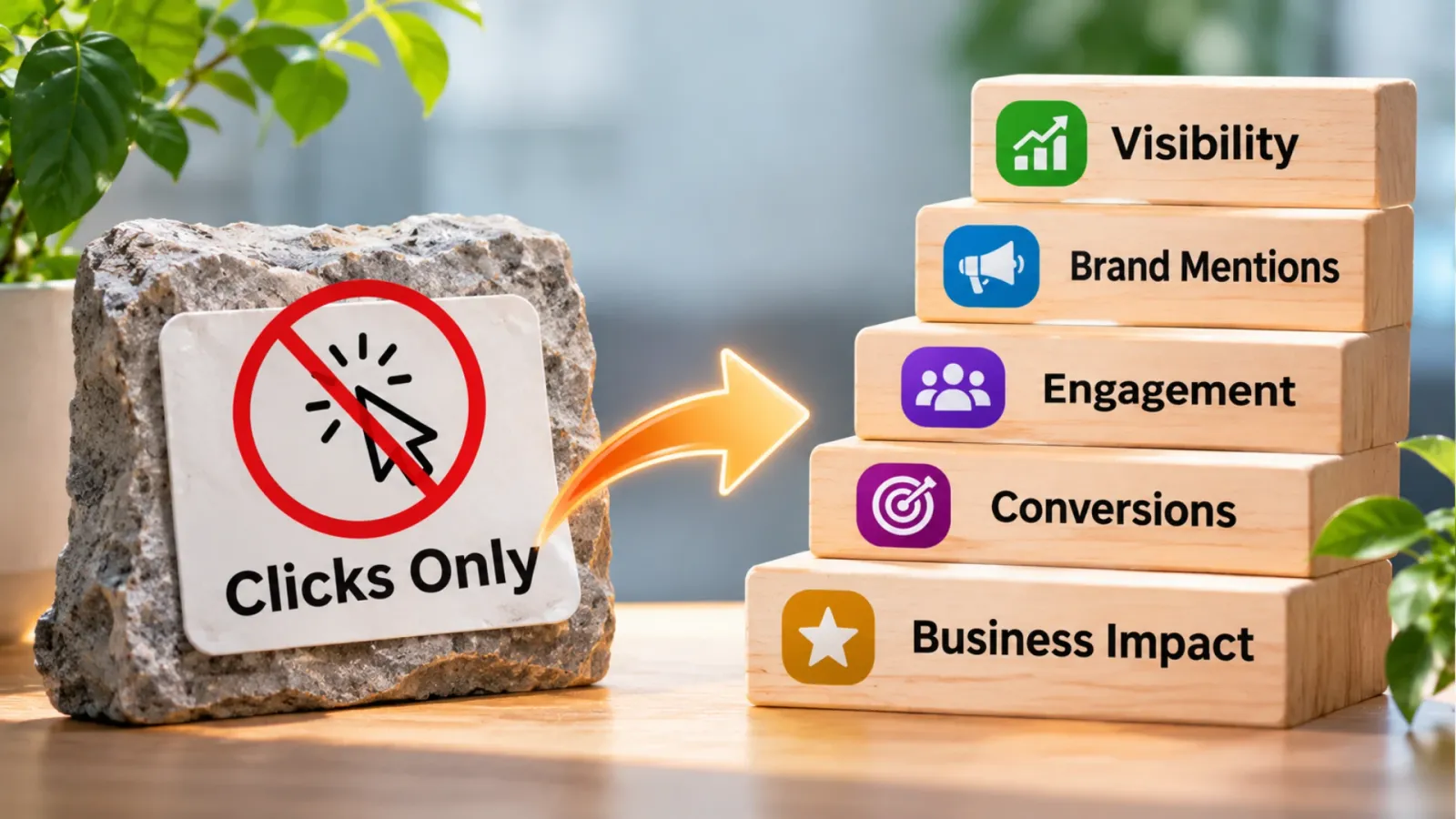
Clicks remain important, but they no longer explain the full search journey. Modern reporting must separate visibility, traffic quality, brand demand, and commercial outcomes. The purpose is not to make declining traffic look positive, but to identify where search still creates value.
| Metric | What it reveals | How to use it |
|---|---|---|
| Organic clicks | Direct visits earned from search | Track by intent, page type, and conversion quality |
| Organic impressions | Search visibility and result exposure | Compare with CTR and ranking changes |
| AI-feature impressions | Visibility in AI Overviews and AI Mode | Review by page, device, country, and date |
| Branded search demand | Later searches influenced by recognition | Compare brand-query growth with visibility periods |
| Direct traffic | Possible delayed return visits | Analyse alongside campaigns and branded demand |
| Qualified lead rate | Commercial quality of remaining visits | Measure by landing page and query intent |
| Assisted conversions | Search influence outside last-click attribution | Connect organic exposure with later channels |
| Revenue per organic visitor | Business value of the traffic earned | Use alongside total traffic, not instead of it |
Google’s Generative AI performance report is rolling out to only some Search Console properties. It currently focuses on impressions from AI Overviews and AI Mode rather than providing every citation or click detail marketers may want. Teams without access should continue using query-level trends, live SERP reviews, branded demand, and conversion data.
Impressions alone are not success, just as traffic alone is not success. A strong reporting model connects visibility to branded searches, direct visits, leads, sales, and customer acquisition cost. Smaller companies can connect this framework to an affordable local seo solution built around measurable local demand rather than vanity rankings.
Connect Zero-Click Visibility to Revenue Outcomes
Search strategy should begin with the business action that matters. Rankings, citations, and impressions are supporting indicators rather than the final objective. Work backwards from qualified enquiries, purchases, bookings, subscriptions, or retained customers.
Map informational topics to the next decision in the customer journey. A broad problem guide may lead to a comparison, a local page, a service explanation, or an assessment request. The off-page SEO strategy overview can strengthen credible third-party discovery without relying on planted forum promotion.
Use first-party measurement wherever possible. Connect Search Console, analytics, call tracking, customer relationship data, and sales outcomes so the team can see which pages assist revenue. Review branded searches and direct visits during periods when AI or SERP visibility rises.
Owned audiences reduce dependence on any search platform. Email lists, customer communities, useful tools, repeat visitors, and direct brand demand create paths that Google cannot fully absorb. Zero-click adaptation is strongest when SEO remains productive but no longer carries the entire acquisition burden.
Frequently Asked Questions About Zero-Click Search
Does Zero-Click Mean the Searcher Took No Action?
No, it only means the session produced no click to an external website under the study’s measurement rules. The user may refine the query, use a Google feature, remember a brand, call later, or leave the session. Businesses should avoid interpreting zero-click as zero influence.
Why Do Zero-Click Studies Report Different Rates?
Studies use different countries, panels, devices, time periods, and definitions of a click. Some include particular Google-owned destinations, while others focus only on external websites. Compare methodology before comparing headline percentages.
Can a Site Opt Out of Google’s Generative Features?
Google provides controls that can affect participation in its generative search experiences, but opting out may also remove potential visibility from those features. The commercial effect depends on the site’s query mix and current performance. Review reporting and business value before making a broad exclusion decision.
Does an LLMS File Improve Google AI Visibility?
Google states that it ignores LLMS.txt for Search visibility and ranking. Maintaining the file for another service may still be harmless when that service uses it. It should not replace indexing, content quality, internal linking, or technical maintenance.
Can AI Overview Citations Change Between Searches?
Yes, generative answers can vary with query wording, context, location, freshness, and system updates. A page may appear for one formulation and disappear for another. Track patterns across a keyword set rather than relying on one screenshot.
Should Every Long-Tail Variation Have Its Own Page?
No, separate pages are unnecessary when the variations share the same intent and can be answered properly together. Excessive near-duplicate pages can weaken quality and create maintenance problems. Build one strong resource unless a variation requires a genuinely different decision or solution.
Are Local Searches Safer From Zero-Click Results?
Local searches still experience zero-click behaviour through maps, profiles, reviews, and direct contact actions. However, many local decisions require location, availability, trust, and service comparison. Strong profiles and local landing pages can still convert visibility into calls or visits.
Is SEO Still Worth Funding When Clicks Decline?
Yes, because search continues to influence discovery, evaluation, branded demand, and high-intent actions. The investment must be judged through qualified leads and revenue rather than rankings or traffic alone. Technical SEO, original content, local visibility, and owned channels should work together.
Turn Search Visibility Into Measurable Demand
Google’s zero-click search trend changes the value chain, but it does not remove the need for useful websites or disciplined SEO. The strongest strategy diagnoses losses accurately, creates difficult-to-replace value, protects technical eligibility, and connects visibility to real customer actions. Businesses should optimise for both being selected as a source and giving people a compelling reason to continue.
Want us to handle it for you?
See the sites, the numbers and the price before you order.