
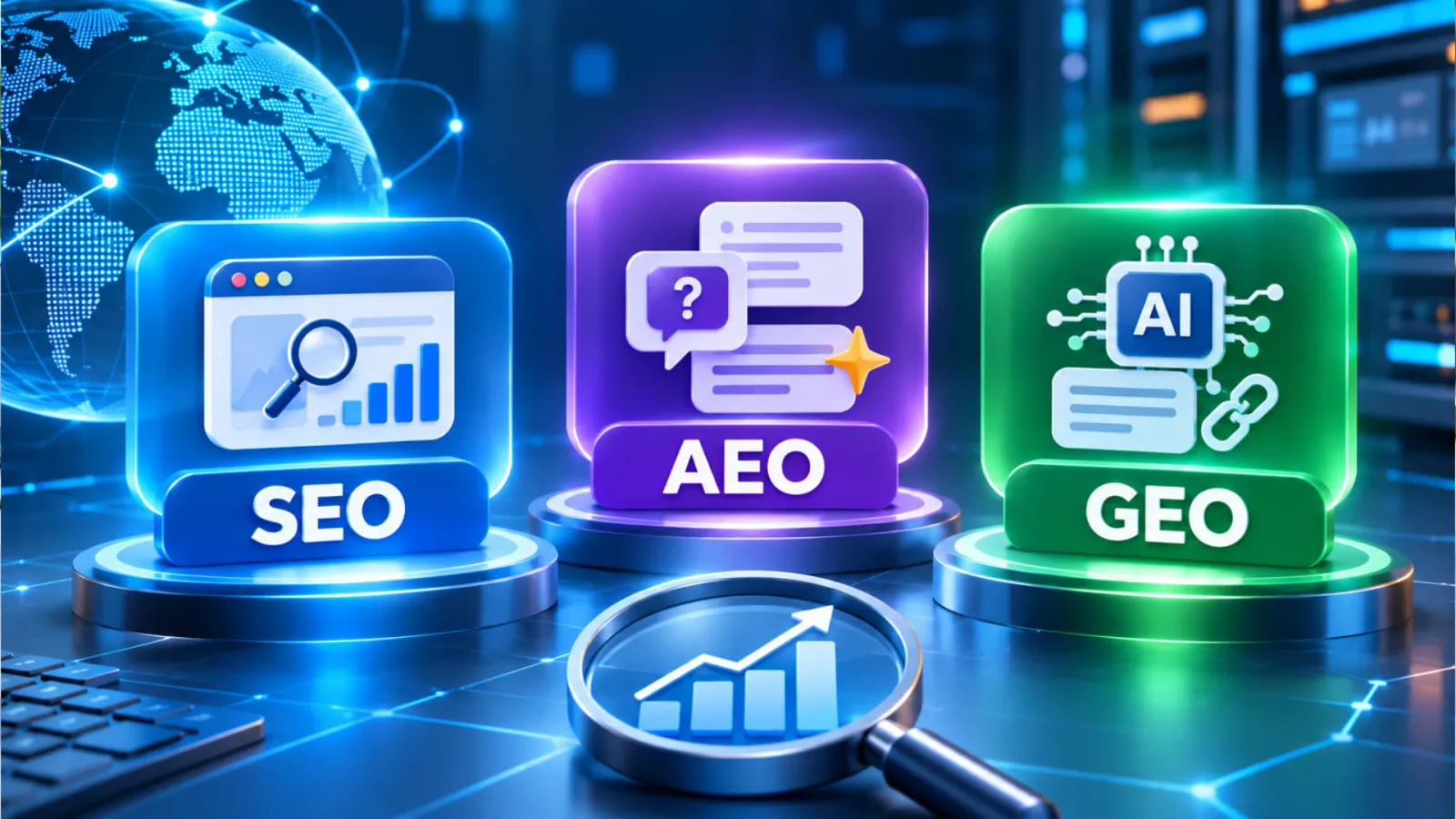
SEO improves organic search visibility through technical optimization, relevant content, and website authority. AEO focuses on providing clear answers, while GEO addresses visibility within AI-generated responses through mentions and citations. Combining these approaches creates a unified search strategy with separate performance measurements.
Businesses now face three competing labels for online visibility, yet treating them as separate systems often creates duplicate pages, conflicting content, wasted budgets, and reports that cannot explain which activity produced a result. The serious response is to protect technical SEO, present important answers clearly, verify entities and claims, and build credible information that both search engines and generative systems can understand without relying on unsupported shortcuts. The practical solution is one strong search foundation with distinct ranking, answer, and citation outcomes, not three disconnected strategies competing for the same resources**.**
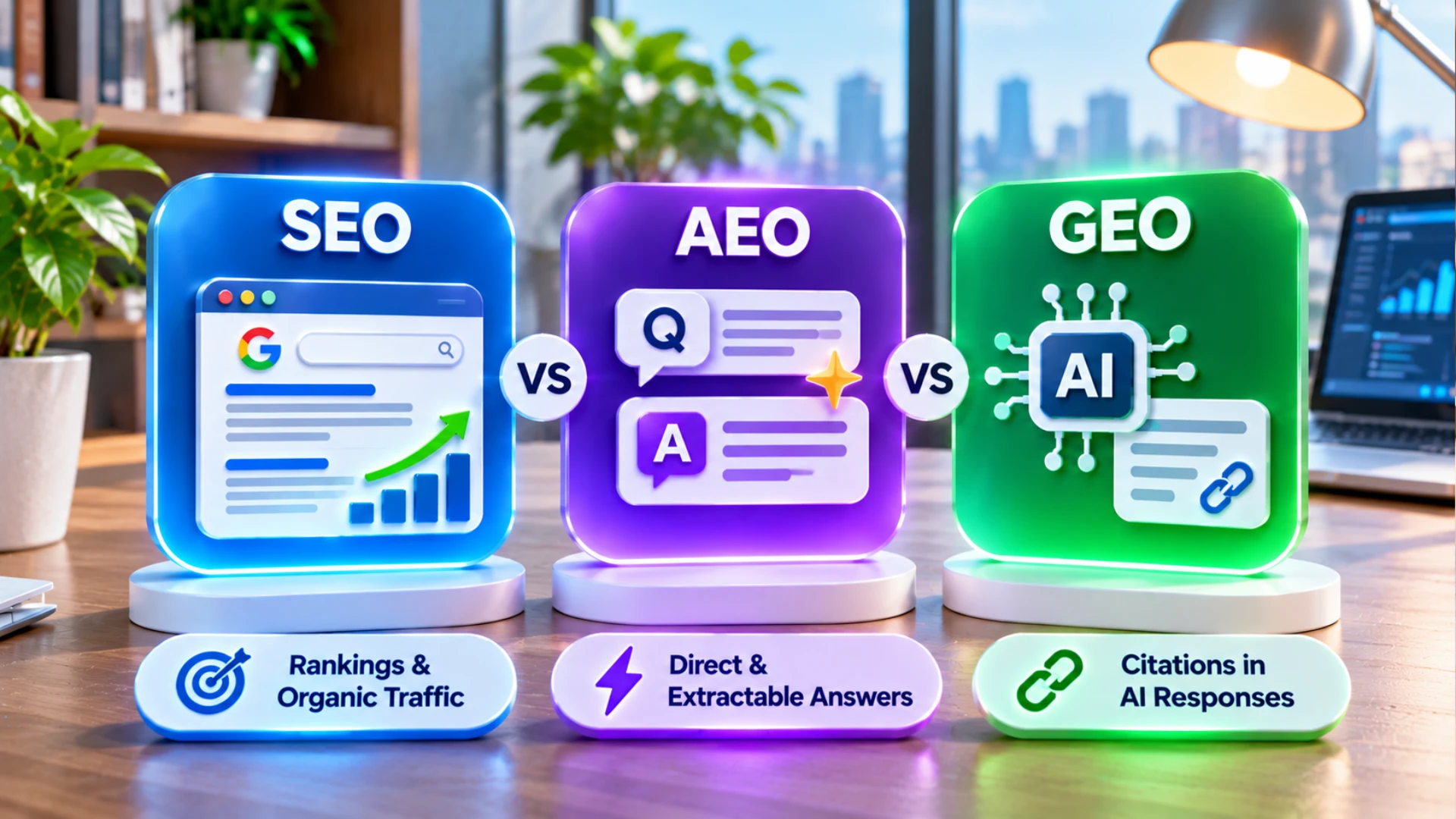
These terms describe different visibility outcomes, but they depend on many of the same foundations. The distinction matters because each outcome needs different evidence and measurement. This table shows where the priorities change.
| Optimization layer | Primary outcome | Main focus | Success signal |
|---|---|---|---|
| Search Engine Optimization (SEO) | Rankings and qualified organic visits | Crawlability, relevance, page quality, internal structure, authority | Impressions, clicks, leads |
| Answer Engine Optimization (AEO) | Direct, extractable answers | Clear questions, concise answers, complete explanations | Answer inclusion, assisted discovery |
| Generative Engine Optimization (GEO) | References within generated responses | Factual depth, entity clarity, corroboration, original evidence | Citations, mentions, referral visits |
SEO is the operating foundation. A page must be accessible, indexable, relevant, and useful before Google can consider it for conventional or generative search experiences. Review the technical SEO basics, then use an on-page SEO checklist guide to confirm that titles, headings, content, links, and indexation signals support the topic.
AEO is a presentation layer. It reduces the effort required to locate and understand the central answer without turning the page into thin machine-focused fragments. Give a direct response first, explain conditions next, and then provide the evidence needed for a decision.
GEO is a visibility and validation layer. Generative systems may combine several sources rather than repeat the first conventional result, so rankings alone cannot guarantee inclusion. Clear entities, verifiable claims, original contribution, accurate brand information, and credible external discussion become more important.
Why Does One SEO Foundation Still Control Every Outcome?
Modern search experiences look different, but weak foundations still restrict every form of visibility. Search systems cannot confidently use pages they cannot crawl, understand, index, or present properly. Start with technical eligibility before testing AI-search tactics.
Step 1: Confirm discovery and indexation. Important URLs should be reachable through navigation and contextual links, while canonicals, redirects, robots directives, and status codes should communicate one preferred version. The SEO audit structure can reveal whether the real barrier is duplication, crawl waste, weak content, or an indexing conflict.
Step 2: Stabilize page experience. Slow rendering, unstable layouts, intrusive elements, and poor mobile usability can waste the attention a result earns. Use the core web performance explanation, page speed ranking impact, and mobile SEO planning guide to prioritize improvements affecting real visitors.
Step 3: Build a connected information structure. Each page needs a defined purpose, supporting articles, and natural paths to the next useful resource. Understanding the internal linking impact prevents isolated pages and helps visitors and crawlers discover deeper evidence.
Step 4: Remove conflicting signals. Duplicate intent, inconsistent names, weak titles, and several pages competing for one question can blur the preferred URL. Review common SEO ranking mistakes before adding more pages when consolidation may be the stronger action.
How Does AEO Make Complete Answers Easier to Extract?
AEO works when a page resolves the immediate question without hiding the answer behind a long introduction. The objective is clarity rather than extreme brevity. A useful answer should stand alone while leading into evidence and practical action.
Step 1: Match one real question to one page purpose. Research should identify the decision or task behind the query instead of collecting phrases only because they show search volume. Follow a disciplined keyword research process to separate informational, comparison, local, and purchase intent.
Step 2: State the answer near the relevant heading. The first sentence should resolve the issue, while the next sentences clarify scope, limitations, and conditions. This helps readers scan efficiently without forcing every section into identical fragments.
Step 3: Strengthen the explanation. Add examples, process details, criteria, original observations, and evidence that make the answer more useful than a generic summary. Apply focused content optimization techniques so keywords support meaning without replacing expertise.
Step 4: Improve search presentation. Accurate titles and descriptions should explain the page’s distinct value before the visitor clicks. Follow the metadata optimization steps and learn the schema markup meaning before adding markup that must match visible content.
How GEO Changes Visibility Beyond Traditional Rankings?
GEO matters when users receive a synthesized response instead of reviewing a standard results list. The system may compare sources, combine facts, and present brands outside conventional ranking order. That creates new visibility opportunities and accuracy risks.
Step 1: Make the entity unmistakable. Use one consistent organization name, service description, author identity, address, and canonical URL wherever those details appear. Alternative names can be documented, but they should not create conflicting versions of the same entity.
Step 2: Publish information worth referencing. Generic definitions rarely provide enough distinction because many websites repeat them. First-hand processes, original examples, tested limitations, named methodologies, and current observations give readers and systems a stronger reason to use the page.
Step 3: Build genuine external corroboration. Reviews, interviews, videos, forum participation, earned coverage, and industry discussions can clarify how others understand the brand. Use an off-page SEO strategy overview to guide the work, but never replace authentic participation with fabricated mentions.
Step 4: Audit high-value prompts. Test questions buyers ask before choosing a provider, then record the sources, brands, and claims appearing across relevant systems. The goal is to identify missing evidence, weak positioning, factual inconsistencies, and source types shaping the conversation.
For local organizations, accurate profiles, location pages, customer feedback, and community relevance create practical corroboration. Use business profile optimization steps, understand review response importance, and evaluate local event sponsorship value before pursuing artificial local mentions. Genuine local evidence supports both conventional discovery and generated recommendations.
Stop Wasting Budget on Unsupported GEO Search Hacks
New terminology creates urgency, and urgency makes weak tactics easier to sell. Some practices sound technical because they use new file names or large volumes of markup. Separate optional experiments from requirements supported by current search guidance.
llms.txtis not a Google ranking requirement. Maintain it only when another documented system uses it.- Tiny content chunks are not mandatory. Structure sections around reader needs and topic logic.
- More JSON-LD does not create authority. Markup should describe accurate, visible information.
- FAQ schema no longer produces Google FAQ rich results. Visible FAQs remain useful only when they answer genuine remaining questions.
- Mass mentions do not create trustworthy GEO signals. Manufactured consensus can become a spam and reputation risk.
The safest decision is to test every recommendation against technical documentation, user value, and measurable outcomes. A proper audit should show whether a suggested task fixes a real constraint or simply follows a trend. This discipline protects budgets and keeps the strategy aligned with durable quality.
Build Content That Search and AI Systems Can Trust
Trust does not come from adding confident language to a generic article. It develops when claims are specific, authorship is clear, evidence is visible, and important conditions are acknowledged. This sequence supports rankings, direct answers, and generated synthesis.
Step 1: Define one central problem. State who faces it, what decision they need to make, and what happens when the issue remains unresolved. Avoid forcing every service and available keyword into the same introduction.
Step 2: Give the decisive answer early. Readers should understand the article’s direction before investing several minutes in it. The remaining content should prove, qualify, and operationalize that answer.
Step 3: Add original information. Include experienced observations, process evidence, screenshots, measurements, examples, or clear expert criteria where available. Never invent statistics, customer outcomes, research findings, or tests the business did not perform.
Step 4: Create useful supporting paths. A local organic results overview can establish the discovery landscape, while organic local ranking factors explain signals needing attention. Continue implementation through local SEO improvement methods and a location page creation workflow.
Step 5: Maintain accuracy after publication. Review removed features, changed services, broken links, outdated examples, and claims that depended on past platform conditions. Meaningful updates should improve the evidence rather than merely change the publication date.
Businesses managing several channels may need auditing, keyword mapping, content production, on-page work, interlinking, and authority development coordinated through one plan. The all in one powerful monthly seo packages offer a service path for teams that need those activities organized instead of purchased as disconnected tasks. Compare the scope with verified site gaps before choosing a package.
Measure Rankings, Answers, and AI Mentions Separately
A single ranking report cannot explain every modern discovery path. Search positions, extracted answers, generated mentions, citations, referral visits, and lead quality represent different stages. Measurement should connect each signal to a business outcome.
| Area | Record | It does not prove |
|---|---|---|
| Conventional SEO | Impressions, rankings, clicks, conversions | Guaranteed AI inclusion |
| AEO visibility | Answer appearance, query, source page | Permanent ownership |
| GEO visibility | Mentions, cited URLs, accuracy, referrals | A universal AI ranking |
| Business impact | Enquiries, revenue, assisted conversions | One channel caused everything |
Step 1: Establish a repeatable prompt set. Use buyer questions, comparisons, local-intent prompts, and problem-led prompts with commercial relevance. Record wording, platform, location, and date so observations remain comparable.
Step 2: Separate observation from causation. A mention after an update does not prove the change caused it because model behavior and source availability also move. Report patterns over time and avoid conclusions from one test.
Step 3: Compare visibility with performance. A citation has limited value when the landing page fails to satisfy the visitor or support the next decision. Track visits, assisted conversions, useful enquiries, and inaccurate brand descriptions requiring correction.
Choose SEO Support That Matches Your Real Search Gap

The right service depends on whether the business has a broad sitewide problem or a concentrated local discovery problem. A package should follow diagnosis, not replace it. These two paths connect the strategy to practical action.
Choose comprehensive support when the site needs technical review, content mapping, publishing, on-page optimization, internal linking, and authority work across several topics. This route fits teams dealing with inconsistent vendors or no clear roadmap. Use baseline metrics so each activity can be assessed against visibility, engagement, and conversion.
Choose local support when the main gap concerns map visibility, location relevance, business information, local pages, reviews, citations, and geographically specific content. The affordable local seo solution is positioned for businesses needing these factors handled within one structured campaign. Pair it with accurate service details and a realistic definition of the locations the business can serve.
Final Decision: Layer the Strategy, Never Split It
The strongest approach keeps SEO, AEO, and GEO connected while measuring each outcome separately. SEO creates eligibility, AEO improves answer clarity, and GEO strengthens referenced visibility. Splitting them usually duplicates work and hides the real bottleneck.
Begin with technical access, focused pages, useful answers, original evidence, and coherent internal structure. Then expand credible third-party presence and measure how search and generative systems represent the brand. Optimize for people first, preserve the SEO foundation, and add answer and generative layers only where they solve a verified problem.
Frequently Asked Questions About SEO, AEO, and GEO
These questions address practical uncertainties that remain after the main strategy and implementation path are clear. Each answer focuses on one distinct decision. They avoid repeating issues already resolved in the article.
Is GEO replacing traditional SEO?
No, GEO is not replacing SEO because generated experiences still depend on discoverable and credible web information. GEO changes how visibility may be earned and measured after the foundation exists. Expand reporting rather than abandon established SEO work.
Can a page rank first but receive no AI citation?
Yes, ranking and generative selection are different outcomes. A system may combine other sources or prefer a passage answering a specific subtopic more directly. Ranking remains valuable, but it cannot guarantee every generated mention.
Does AEO require a separate version of each page?
No, most sites should improve the existing page instead of creating an answer-only duplicate. Add a direct response near the relevant heading, then support it with context and proof. Create another page only when the intent is genuinely different.
Does schema markup improve GEO visibility?
Schema can clarify entities and page information, but it cannot force a citation. Its value depends on accuracy and consistency with visible content. Authority still comes from useful evidence, expertise, reputation, and overall quality.
Should every article include an FAQ section?
No, FAQs belong only where readers have important questions not answered elsewhere. Repeating the article in question form adds little value. Use a concise FAQ when it removes a final objection or implementation doubt.
How often should AI visibility be checked?
A monthly review is practical for most established campaigns, while active launches may justify more frequent observation. Use the same prompt set and record platform, date, location, source, and brand description. Constant checking usually creates noise.
Are Reddit and YouTube required for GEO?
No single platform is required for every market or query. Their value depends on where the audience discusses the subject and which sources relevant systems surface. Participate only where genuine expertise or customer discussion naturally belongs.
What should a small business optimize first?
Fix indexation, service-page clarity, mobile experience, business information, and conversion paths first. Then publish focused answers and strengthen credible local or industry references. Experimental GEO tasks should follow those essential improvements.
Want us to handle it for you?
See the sites, the numbers and the price before you order.